College Majors and the Economic Incentive Structures of AI Integration
Explore how AI integration aligns with college majors, economic shifts toward outcome-based software pricing, and the future of entry-level talent.
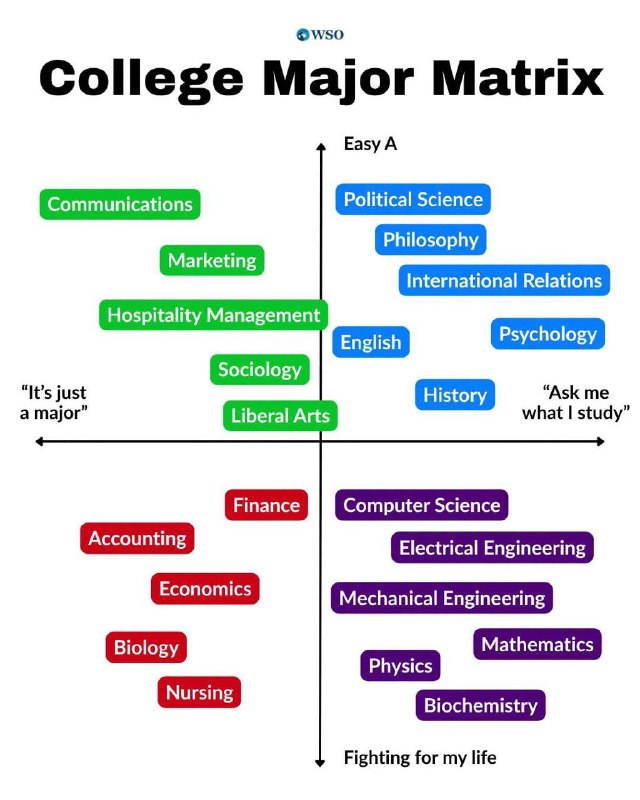
College majors do not care about artificial intelligence based on curriculum design alone, but rather based on the economic incentive structures of the industries they feed. According to data current as of January 15, 2026, artificial intelligence integration maps heavily across the university landscape, reflecting stark disparities across disciplines.
The Economic Shift Toward Outcome-Based Value
For founders, creators, and operators tracking higher education, the real signal is not what is being taught in lecture halls today. It is how the commercial software landscape is reorganizing around completed work.
As captured in recent industry intelligence from August 30, 2026, OpenAI has quietly started offering major customers outcome-based pricing, where enterprises only pay when artificial intelligence successfully completes tasks like customer support interactions. This marks a massive operational shift away from selling raw tokens and toward selling completed work.
Which Disciplines Feel the Pressure First?
Majors tied to knowledge work, data synthesis, and communication are facing immediate operational disruption. Because commercial entities are rapidly transitioning to outcome-based software models, students in business, data science, economics, and public policy must master AI leverage to remain competitive.
When software is priced by the outcome rather than the API call, the professionals managing those workflows need deep system-level fluency. They cannot just prompt an interface; they must design, audit, and direct autonomous workflows that produce verifiable business results.
Operator Playbook Audit your stack for outcome-based tools: Stop paying for unconstrained token generation and seek out software vendors that tie costs directly to completed deliverables. Align academic pipelines with commercial realities: If you hire interns or entry-level operators, prioritize candidates who view AI as an infrastructure layer rather than a novelty writing tool. Focus on workflow orchestration:* Teach and deploy systems that manage end-to-end tasks, preparing your operation for the shift from human-in-the-middle to human-as-orchestrator.
Disciplinary Concentration and Talent Pipelines
While cultural stereotypes captured in the college major matrix sort academic paths by workload intensity—contrasting heavy STEM and finance tracks like computer science and engineering against humanities and communication fields—actual technology adoption metrics tell an even more precise story.
Major technical and professional disciplines are pulling far ahead of the baseline: Computer Science and Engineering: 4.00x relative usage index Business and Finance: 2.68x relative usage index * Humanities and Arts: 1.48x relative usage index
Conversely, traditional trades and less digitized fields index significantly lower, with certain applied tracks dropping to 0.25x. For college programs, this means academic departments face an urgent mandate to upgrade their technical curricula to match the hyper-accelerated adoption rates of leading commercial job markets.
Frequently Asked Questions
Do traditional college degrees still matter in an AI-driven economy? Degrees still matter for foundational credentialing and network access, but their economic return now depends entirely on how quickly the underlying department integrates practical AI leverage into its core projects.
How does outcome-based pricing change entry-level hiring? When companies pay software vendors only for completed tasks, entry-level workers are expected to operate at a higher level of oversight and strategic direction from day one, shifting the value of junior talent toward system orchestration rather than manual execution.
Why do some academic disciplines show significantly higher AI adoption than others? Discipline-by-discipline usage variations are driven by the density of knowledge work, technical integration requirements, and regional industry clusters, with technical and professional hubs leading raw adoption indices.
Sources & References Anthropic Economic Index - "Claude AI Usage Across College Majors" (Sample window November 13–20, 2025, published January 15, 2026) Industry Intelligence - "OpenAI Outcome-Based Pricing Shift" (August 30, 2026)